Monday, October 9, 2017

The Truth About Sciatica

Have you ever stepped out of bed in the morning and had intense pain radiating down your leg? Or had lower back pain that won’t let up? These are symptoms of a condition called sciatica, and it can seriously diminish the quality of your life.

Even if you feel the pain in your leg, the issue is normally in your spine. The pain can come and go, but there’s no reason to live with it. Learn more about this condition and how we can help it below. Let’s start by learning more about the sciatic nerve itself:

The Sciatic Nerve

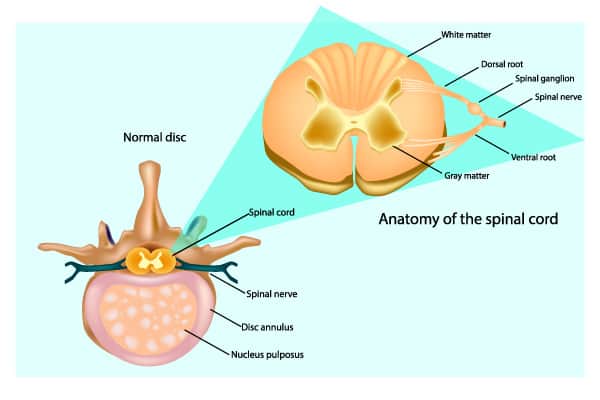
Your sciatic nerve is the largest single nerve in your body. It starts in the spine of your lower back where it is made up of smaller roots that branch out and then converge to make the sciatic nerve. The sciatic nerve travels through an opening in the pelvis and then below the piriformis muscle. Portions of the sciatic nerve then branch out in each leg to innervate the thigh, calf, foot, and toes.

The size and complexity of this nerve means that nerve pain can have several causes. “Sciatica” isn’t a diagnosis but rather a symptom of an underlying condition. Before we describe the condition, let’s learn more about the pain you may be feeling.

Sciatic Nerve Pain

In the last section we described how the sciatic nerve originates from roots in the lower spine. These nerve roots can become pinched, which will result in intense pain that runs down the entire length of one or both legs. So while the pain you feel is in your leg, the cause of the pain may be in your spine. Most people find this pain to be intolerable, sometimes excruciating. And since they may not understand the cause of their pain, they become frustrated when they’re unable to manage it.

So how do you know if you have sciatica? Most often the symptoms are

Shooting pain the back of the leg and/or lower back
  • Numbness or tingling in your legs
  • Trouble moving or staying active
  • Stiffness in your feet
  • Pain during the night
  • Nagging pain after sitting or standing for a long time
The cause of the pain, numbness, tingling, and weakness depends on where the nerve is pinched. For example, symptoms in your foot and ankle indicate nerve impingement near lumbar segment 5 (L5).

Conditions that Cause Sciatic Nerve Pain

Disc Herniation

The vast majority of sciatic nerve pain is caused by a herniated disc (also known as a slipped disc or a ruptured disc). This means a disc in the spine has cracked or torn, causing it to protrude into the spinal canal. This protrusion can pinch the sciatic nerve, which sends pain signals down the associated leg.

Piriformis Syndrome

The piriformis muscle is located in the buttock region. When the piriformis muscles spasm , it can irritate the nearby sciatic nerve and cause pain, numbness, and tingling along the back of the leg and into the foot.

Spinal Stenosis

Spinal stenosis is a narrowing of the spine’s passageways. This narrowing causes the nerves to become compressed, which can result in pain, tingling, weakness, loss of balance, and immobility. The nerve compression of spinal stenosis can cause sciatic leg pain, which is usually brought on by activities like standing and walking.

Spondylolisthesis

Spondylolisthesis is a condition wherein a vertebra slips forward over an adjacent vertebra. This displacement causes spinal nerve root compression and often results in sciatic leg pain. Spondylolisthesis is usually caused by spinal degeneration, trauma, or physical stress. 

Can I Cure Sciatica at Home?

Before we talk about home pain management, it’s important to stress again that sciatica is a symptom and not a diagnosis. While some of these home remedies can help you temporarily manage or alleviate the pain, you should see a physician to determine the cause of the sciatic nerve pain. He or she will help you outline a long term treatment plan so your pain doesn’t return or become permanent.

Activity

Light stretches and isometric workouts can help relieve the pain from sciatica while also improving your general health or strength. Consult with a physical therapist to learn which exercises are beneficial and to make sure proper form is used.

Heat

Heating pads, such as those found at most drug stores, can provide temporary relief. A heating pad placed on the lower back and left on low/medium heat for 20 minutes can help you manage the pain. This can be repeated several times a day as needed.

Diet & Lifestyle

To combat inflammation and improve your odds of feeling better more quickly, make sure to eat a nutrient-dense healing diet, avoid smoking/using recreational drugs, and get exercise and good sleep.

Medical Help for Sciatic Pain

Chiropractor/Massage

Chiropractors and massage therapy will focus on relieving the muscle tension in the sensitive area and also re-aligning the spine to reduce impingement and irritation. In some cases, this will provide short or even long-term relief, but in the cases of herniation, stenosis, and spondylolisthesis, these treatments may only temporarily alleviate the symptoms.

Pain Medication

Over-the-counter or prescription pain medications are usually effective in relieving sciatica pain. These medications can reduce the inflammation contributing to the pain, which can offer short-term relief. In the cases of severe pain, muscle relaxants or narcotic medications can help offer quick but temporary relief.

Epidural Steroid Injections

For severe sciatic nerve pain, an epidural steroid injection in the area around the nerve can reduce inflammation and affect relief. Unlike oral pain medication, these injections are made directly into the inflamed area. The relief from these injections helps you resume your normal range of activities and allows you to move forward with long-term physical therapy.

Physical Therapy

Long-term relief from sciatica pain will most likely involve some form of physical therapy. Chiropractors, medications, and injections can provide relief from pain symptoms, but physical therapy will help promote the muscle balance and physical conditioning to maintain a pain-free life in the long term.

Surgery

Surgery is always a last resort for managing sciatic nerve pain and should only be explored after chiropractic treatments, pain medication, injections, and physical therapy have failed to provide relief. If your pain is persistent and preventing you from engaging in daily activities, your doctor may explore a surgical option.

Most of us will suffer from back pain sometime in our lives, and that pain often comes with symptoms in the sciatic nerve. While the absolute best thing to do for your pain is to keep stretching and moving, the pain may not let you do that.

If your sciatic nerve pain is serious enough to keep you from enjoying your daily life, you won’t want to wait to see if it gets better. SpineOne knows this, which is why we offer same day appointments with our physicians to help you identify the underlying cause of your sciatic pain. Call us today, and we’ll help you with a long-term plan to live pain free.

Monday, September 18, 2017

The Surprising Truth About Text Neck

You may have heard the term “Text Neck” in the news, on social media, or in a discussion among friends. Although this condition is increasingly discussed, it has yet to be taken very seriously. A number of our patients complain of the symptoms of this condition, though not all of them believe their neck pain began with staring at their phones. Text Neck is very real and poses a serious risk.

Text Neck is a result of staring down or staying hunched over an activity for too long.  This posture isn’t exactly new; people have done this for centuries with books, drawings, sewing, and many other activities. The condition is referred to as “Text Neck” because the saturation of mobile devices, and our cultural addiction to them, have multiplied the amount of time we spend hunched over.

Your head weighs, on average, around 10 pounds. With a healthy spine, you never have to think about that weight; your neck manages it with ease. As you bend your neck forward, the stress on your cervical spine increases exponentially. Some experts say that the stress on your cervical spine doubles with every inch your head tilts down.

While you’re staring down at your shiny new phone, the stress on your cervical spine has increased to 50 pounds! Now take into account that you could spend around three hours a day staring at your phone and it adds up to extreme stress on your neck.

Is Text Neck Really a Problem?

You’ve probably been staring at your device for years and haven’t noticed any problems. That’s where this condition’s insidious nature is important to understand. Its effects are subtle but cumulative. Text Neck has been linked to headaches, neurological issues, depression, and heart disease. These symptoms can creep up on you slowly, but chances of a negative impact on your health increase each time you hunch over your phone.

Maybe most alarming is how often we’ve seen this behavior in kids and young adults whose spines are still developing.

What Are the Symptoms of Text Neck?

Stretching your body’s tissue for extended periods of time causes it to become sore and inflamed. Repeated stress on the vertebrae can also lead to herniated disks, pinched nerves, and eventually improper curvature of the spine.

Text neck most commonly causes neck pain and soreness. In addition, looking down at your cell phone too much each day can lead to:
  • Upper back pain ranging from a chronic, nagging pain to sharp, severe upper back muscle spasms.
  • Shoulder pain and tightness, possibly resulting in painful shoulder muscle spasm.
  • If a cervical nerve becomes pinched, pain and possibly neurological symptoms can radiate down your arm and into your hand (known as cervical radiculopathy).
  • Text neck may also possibly lead to chronic problems due to early onset of arthritis in the neck.


What Can I Do?

Luckily there are some steps you can take every day to minimize the impact that your mobile devices have on your spine health. Here are some suggestions­­­­­­:

Stretch!

When you get a couple of minutes during your day, stop to stretch your neck and reset your brain. Tilt your head from left to right a few times. Look over your left shoulder, and then slowly turn your head to look over your right shoulder. Roll your shoulders and neck. Anything you can do to get those stiff muscles moving will pay off.

Hold your phone higher

Holding your device higher and bending your neck less can dramatically reduce the strain on your cervical spine. Holding your device in this way can also improve your situational awareness.

Set it Down

So while this is maybe easier said than done, it’s nonetheless important to put the phone down every once in a while. Maybe a text message gets missed, but the benefit to your health and wellness will be worth it in the long run.

Monday, August 28, 2017

Is Kyphoplasty an Effective Treatment for Compression Fractures?

Compression fractures occur in your vertebrae when the bone density is no longer enough to support the weight of your spine. This condition often occurs as a result of aging, injury, or osteoporosis. The vertebrae in the spine can develop cracks and fractures over time, resulting in lingering pain and lost height.

Vertebral Augmentation

Veterbral augmentation was developed in 1984 to reduce pain and loss of function from vertebral compression fractures. Prior to the invention of vertebral augmentation, patients suffering from compression fractures had only the option of bed rest until the bones healed and the pain subsided.

There are two types of vertebral augmentation – Vertebroplasty and Kyphoplasty. These minimally invasive procedures can provide rapid relief from the pain of these fractures, and patients undergoing these treatments are typically able to resume normal activity in the same day.

Vertebroplasty

Vertebroplasty involves injecting a cement-like substance directly into the fractured vertebrae, which stabilizes the bone and can immediately decrease the pain resulting from the fracture. This procedure is percutaneous (minimally-invasive), requiring only a local anesthetic at the area of the needle insertion. The procedure normally takes an hour, and patients can return home on the same day.

Kyphoplasty

Kyphoplasty is similar to vertebroplasty. The primary difference with Kyphoplasty is it involves a first step of inflating a small balloon (the KyphX Inflatable Bone Tamp) into the fractured area. The balloon expands the vertebrae to resume most of its original size and shape prior to the fracture. After space is created in the vertebrae, a cement-like substance is injected to fill the void and stabilize the bone.

Tuesday, August 15, 2017

"I was very happy to get here and have everything go as smoothly as it did. I was surprised to get X-Rays and an MRI on the same day - usually one has to set up another appointment for the MRI, causing another missed day at work!

Everyone was polite and professional from the time I walked in the door - the receptionist, the technicians, and, of course, Dr. Vu. I would highly recommend SpineOne to anyone."

-Chris Y.


Tuesday, July 25, 2017

Herniated Disc? Bulging Disc? Slipped Disc? What's the Difference?

If you’ve been to a doctor or done some Internet research, you have undoubtedly come across the terms “pinched nerve,” “bulging disc,” and “herniated disc” while looking for causes of spine pain. These terms are frequently used interchangeably in many articles and discussions, but what do they mean? What’s the difference? And how do you know which one is causing you pain?

All of these terms are ultimately used to describe spinal disc pathology and associated pain. Even healthcare professionals tend to not agree on a precise definition of these terms, which can be frustrating when hearing your diagnosis described differently (such as ruptured disc, torn disc, slipped disc, or disc protrusion) by various physicians.


THE DIFFERENCE EXPLAINED

The difference between a herniated and bulging disc are simple. To use a common metaphor among physicians, think of a disc like a jelly donut. The donut has a liquid center surrounded by a thicker shell. If you press down on the donut, the sides bulge out as the jelly inside presses against them – this is a bulging disc or disc protrusion. If you press down on the donut hard enough that the jelly comes out, it becomes a herniated disc, ruptured disc, or torn disc.

BUT WHAT DOES IT MEAN FOR ME?

If you’re in pain, the nuances in the definitions are likely of little interest to you. The question you’re asking is why am I in pain and how do I get better? Here’s a brief primer on how each condition causes pain:

Pinched Nerve Pain

When a disc herniates, the material leaking out from the disc rather than the disc itself causes the pain. The material inside the disc can pinch or irritate a nearby nerve causing what is called radicular pain (or nerve root pain) that may radiate to other parts of the body. Leg pain from a pinched nerve is referred to as sciatica.

Disc Pain

A degenerated disc can cause pain within the disc space itself. This type of pain is referred to as axial pain, or degenerative disc disease.

DIAGNOSING AND TREATING PAIN

All of these terms refer to radiographic findings (such as a CT or MRI scan), and while these findings are important they’re only one piece of the puzzle in diagnosing disc problems. The truth is just because a scan shows a herniated or ruptured disc doesn’t necessarily mean the disc is the cause of your back pain. The pain may be caused by a muscle strain or other soft tissue injury, in which case treating your bulging disc won’t provide any relief.
Your doctor will use the results of a CR or MRI scan combined with your medical history and symptoms to determine the cause of your pain and the best treatment course. The correct treatment plan will depend on this diagnosis.

Monday, July 10, 2017

"I was extremely pleased with the consultation & exam. The doctor was thorough and just fantastic in discussing my condition and giving me all of my options. Thank you so much!"
-Christine T.

Tuesday, March 14, 2017

Spring Spine Training, Part 1 – Exercising to Manage Back Pain


Spring is finally here! It’s time to get outside and enjoy the sunshine. That means playing golf, riding your bike, hiking, or getting some work done out in the yard. For some of us, however, there’s an issue that will keep you inside - back or neck pain. Being a little informed can have a big effect on your level of pain and help you manage it in the long term.

But My Back Only Hurts a Little 

Low back pain is a reality for most of us at one point or another. The pain can range from being a minor nuisance to completely debilitating. No two people are identical, however, and that certainly applies to how we experience pain. A muscle injury may send one patient to the emergency room with excruciating pain, while a patient with a herniated disc may experience only mild, intermittent discomfort.

 The goal of any treatment - conservative treatment, interventional pain management, chiropractic adjustment, or physical therapy - is to relieve back pain long enough to let you resume normal activity. The last thing you may want to do after an injury is get up and move around, but with rest and treatment, this is often the very best thing you can do for long-term spine health. The right program of exercise and stretching can make a world of difference for your back pain.

What Kinds of Exercises Can I Do? 

Most importantly, check with a doctor before beginning any home exercise or therapy program. It’s important that the exercises are performed correctly and that there’s no risk of further injury. Here are some important rules:

  1. If you experience sharp pain, stop! 
  2. For dull aches or stiffness, stay within reasonable boundaries for your pain tolerance. 
  3. Don’t push yourself too hard. 
  4. Do these exercises at least once a day and do them whenever your back feels stiff or sore

Here are some exercises that you can do throughout your day: 


Sitting Bend Overs

  • Slowly bend forward from a seated position and attempt to reach the floor. Spread the knees as needed to allow for a full range of motion. Hold for 3-10 seconds or until it feels “loose.” Do the opposite—sit and arch your low back as far back as is comfortable. Repeat frequently for short hold-times—make it “fit” your time limitations/schedule! 

Sitting Hip / Back Stretch 

  1. Cross your legs. 
  2. Raise the knee to the opposite shoulder. 
  3. Arch the lower back until you feel an increase stretch in your buttocks. 
  4. Twist your trunk to the side of the raised knee. 
  5. Move your knee up/down and around to “feel” for the tightest “knots” and “work” them loose. 
  6. Modify by bending forward. 
  7. Repeat on the opposite side. 

Sitting Trunk Rotations 

  1. Slowly twist your shoulders and trunk to one side while keeping your knees straight. 
  2. Reach back and pull for additional stretch, if comfortable. 
  3. Hold for 3-10 seconds or until it feels “loose.” 
  4. Repeat on the opposite side. 
 These are some activities that you can do every day to increase strength and mobility in your spine. Again, be sure you consult with a physician before beginning any home therapy routine. In the next article, we’ll discuss the McKenzie method and some additional home exercises to promote long-term spine health.