Showing posts with label sciatic nerve pain. Show all posts

Tuesday, July 25, 2017

Herniated Disc? Bulging Disc? Slipped Disc? What's the Difference?

If you’ve been to a doctor or done some Internet research, you have undoubtedly come across the terms “pinched nerve,” “bulging disc,” and “herniated disc” while looking for causes of spine pain. These terms are frequently used interchangeably in many articles and discussions, but what do they mean? What’s the difference? And how do you know which one is causing you pain?

All of these terms are ultimately used to describe spinal disc pathology and associated pain. Even healthcare professionals tend to not agree on a precise definition of these terms, which can be frustrating when hearing your diagnosis described differently (such as ruptured disc, torn disc, slipped disc, or disc protrusion) by various physicians.
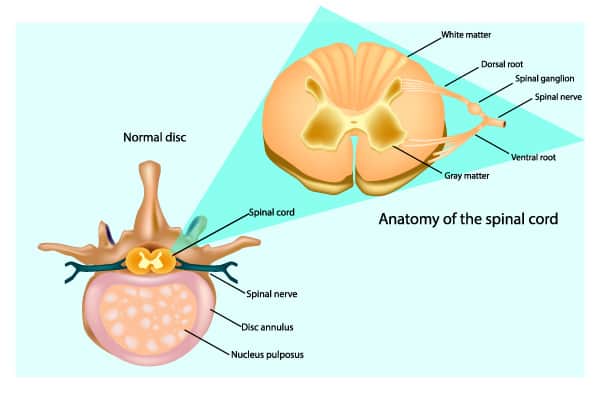

THE DIFFERENCE EXPLAINED

The difference between a herniated and bulging disc are simple. To use a common metaphor among physicians, think of a disc like a jelly donut. The donut has a liquid center surrounded by a thicker shell. If you press down on the donut, the sides bulge out as the jelly inside presses against them – this is a bulging disc or disc protrusion. If you press down on the donut hard enough that the jelly comes out, it becomes a herniated disc, ruptured disc, or torn disc.

BUT WHAT DOES IT MEAN FOR ME?

If you’re in pain, the nuances in the definitions are likely of little interest to you. The question you’re asking is why am I in pain and how do I get better? Here’s a brief primer on how each condition causes pain:

Pinched Nerve Pain

When a disc herniates, the material leaking out from the disc rather than the disc itself causes the pain. The material inside the disc can pinch or irritate a nearby nerve causing what is called radicular pain (or nerve root pain) that may radiate to other parts of the body. Leg pain from a pinched nerve is referred to as sciatica.

Disc Pain

A degenerated disc can cause pain within the disc space itself. This type of pain is referred to as axial pain, or degenerative disc disease.

DIAGNOSING AND TREATING PAIN

All of these terms refer to radiographic findings (such as a CT or MRI scan), and while these findings are important they’re only one piece of the puzzle in diagnosing disc problems. The truth is just because a scan shows a herniated or ruptured disc doesn’t necessarily mean the disc is the cause of your back pain. The pain may be caused by a muscle strain or other soft tissue injury, in which case treating your bulging disc won’t provide any relief.
Your doctor will use the results of a CR or MRI scan combined with your medical history and symptoms to determine the cause of your pain and the best treatment course. The correct treatment plan will depend on this diagnosis.

Monday, May 9, 2016

'My Search Stopped at SpineOne'


Read what first-time patient, Carl C., had to say about his experience at SpineOne.

"Out of 15 years of searching for a great doctor, my search stopped at SpineOne. You have the best staff I every dealt with. I have nothing to say, except your staff and facility are top notch.  Keep up the great patient relations."  -- Carl C.

Tuesday, February 2, 2016

Sciatica: All You Ever Wanted to Know & More

What is sciatica?
Sciatica (also known lumbar radiculopathy
) is a type of pain affecting one or more sciatic nerve roots, which extend from your lower back (lumbar spine) down into the back of each leg. 

What causes sciatica?
Sciatica occurs when the sciatic nerve(s) or its origins along the lumbar spine are pressured, irritated or damaged causing pain, weakness, numbness and/or tingling in the lower back and extremities. Sciatica is typically a result of other medical conditions such as a herniated disc, (Figure 1) disc degeneration or spinal stenosis.  There are also certain risk factors that may increase one’s risk of experiencing sciatica.
Figure 1: Comparison of a healthy vertebral and ruptured vertebral discs

What are the symptoms of sciatica? 
Common symptoms of sciatica:
  • Lower Back pain, which may be a mild ache, or a debilitating-sharp, burning sensation
  • Weakness, pain, numbness and/or tingling in the lower extremities
  • Discomfort when sneezing, coughing or laughing
  • Pain that may worsen at night, interrupting your sleep
  • Heel walk, which is the decreased ability to bring your foot upward
  • Drop foot (difficulty when flexing your ankle and bring up the front of your foot)
  • Restricted ability to walk on your tiptoes, walk, drive and/or lift your heel off the ground
Figure 2: Mapped symptoms of sciatica by vertebrae number and extremity locations.
If you are experiencing any combination of these symptoms, you may have sciatica.

Watch this online video about sciatica.

How is sciatica diagnosed?
Procedures used to diagnose sciatica may include:

  • A straight-leg raise test to induce pain radiating from the hip and down the leg.
  • A foot-flex or Braggard’s Test to identify sciatic nerve symptoms
  • Magnetic resonance imaging (MRI) is used to get detailed images of spinal discs. MRIs use a giant magnet that circles the body.
  • Computerized tomography (CT) scan with myelogram is an X-ray used with a special dye injected into the spinal fluid. The CT scan is used to help identify the “bony” causes of spinal stenosis, while the dye helps diagnose soft tissue conditions such as disc herniation or a bulge.
  • Selective nerve root block (SNRB) is when a local anesthetic is injected into a nerve root suspected of being affected by spinal stenosis. If the patient’s pain goes away after the injection, it can be determined that the compressed nerve is the cause of pain.
How is sciatica treated?
Typically, a combination of treatments works best to treat spinal stenosis. Treatment options may include:
  •        Education—teaching patients spinal anatomy and basic body mechanics to help them manage their condition
  •        Exercise
  •        Activity modification
  •        Medication
  •        Physical therapy
  •        Injections
  •        Surgery
Does sciatica require surgery?
In some cases, surgery is required. SpineOne is dedicated to minimally invasive options whenever possible and will do everything we can to avoid surgery.

When can I expect to resume normal activities without sciatica?
Many people with sciatica are able to resume their normal activities after treatment. The goal of treatment for most patients is to have a healthy, active lifestyle free of sciatic pain. You’ll want to speak with a physician who specializes in spinal care to plan your particular treatment and get back in the swing of things.

Where can I get treatment for sciatica?
If you suffer from chronic or acute back pain and cannot find relief, you should always contact a spine specialist like the physicians at SpineOne.  SpineOne offers a comprehensive evaluation, diagnosis and treatment plan tailored to meet the needs of each individual patient. The physicians at SpineOne perform minimally invasive procedures combined with other practices to get you back on your feet and enjoying your life again.

SpineOne provides doctor consultations, MRIs and treatments all from the same facility for your convenience. Same-day appointments are also available upon request.

Visit www.SpineOne.com or call 303.500.8611 today.