Showing posts with label lower back pain. Show all posts

Monday, November 27, 2017

PREVENTING AND TREATING INJURY IN COLORADO SKI COUNTRY


Owing to abundant snowfall, relatively moderate wintertime temperatures, and expansive mountain ranges, Colorado ranks among the top recreational ski destinations in the world. Colorado’s rich ski history includes figures such as Father Dyers, crossing Mosquito Pass on his skis to visit mining camps, and locations like Camp Hale, the training camp for the 10th Mountain Division during World War II.

Today Colorado is home to almost 50 ski areas that log over 12,000,000 annual ski visits. With all of that activity on our slopes, accidents are inevitable. While skiing is not a contact sport, it involves coordination, high velocity, and muscle endurance to prevent injury and strain.

TIPS TO AVOID INJURY ON THE SLOPES

  • Warm Up: Begin your day with a warm-up routine that includes stretches. Some beneficial stretches include
    • Hips & Back: Lie on your back, bend your knees and let them fall to one side. Keep your arms out to the side and let your back and hips rotate with your knees.
    • Quads & Hamstrings: Kneel onto one knee and place your opposite foot on the floor in front of you. In this lunge position, push your hips forward. Hold onto something for balance, if necessary.
    • Standing Toe-up Achilles Stretch: Stand up and place the ball of your foot onto a step, raised object, or against a wall. Bend your knee and lean forward.
  • Perfect your technique: Take a ski class from a professional before hitting the slopes.
  • Prepare your gear: Make sure you have the right ski boots, bindings, and ski length for your body type and level of skill. Wear appropriate safety gear, such as helmets and wrist guards.
  • Prepare your body: A good conditioning routine, including strength training, cardio, flexibility, and balance exercises, can help increase your strength and endurance on the slopes.
  • Stay on the Trail: Especially while you’re learning, stay on terrain you’re comfortable with. Steeper terrain means higher speeds and greater potential for injury, and leaving park bounds means new conditions and more danger.
  • If you are tired, rest:  Mistakes (and injuries) are far more common when we’re fatigued.

MOST COMMON SKI AND SNOWBOARD INJURIES

Knee Injuries

A third of all injuries in skiing are suffered by the knee joint, most commonly menisci, cruciate, and collateral injuries.

Meniscal injuries occur during a fall when the ski bindings fail to release. When this occurs, the skier twists the lower leg and risks a meniscus tear or strain. Common signs of this condition are pain, swelling, inability to bend the knee, clicking and “giving way” of the knee.

A torn anterior cruciate ligament (torn ACL) can occur when a skier falls and twists the downhill leg, or during an off-balance landing after a jump. The most common indication of a torn ACL is an audible “pop” followed by extreme pain, swelling, and stiffness.

Less common, but more severe, is “O’Donoghue’s triad,” or simultaneous complete (or partial) tear of the anterior cruciate ligament (ACL), medial collateral ligament (MCL), and the medial meniscus.

Treating Knee Injuries from Ski & Snowboard Accidents

Knee injuries are initially treated with the RICE (Rest, Ice, Compression, Elevation) principle, which will help minimize the pain and reduce the swelling.

With most knee injuries, the goal is to stabilize the injury with knee supports (or braces) and begin a program of exercise, therapy, and rehabilitation to facilitate natural healing and conditioning.

If the pain of the injury is too severe to resume even normal activities with the help of a brace, your doctor may recommend a pain management program. In these cases, treatments such as injection and prescription medications can help ease the pain of the injury and allow your body to resume its healing process.

Spine Injuries

Spinal injuries from ski accidents are far less common than knee injuries – that’s the good news. The bad news is that they are usually far more serious and require much more time off the slopes for recovery. The most common spinal ski injuries come from stress or torsion on the spine during a hard fall or a collision.

When minor injuries happen, they usually include pain and numbness. After the adrenaline has faded, these injuries will result in restricted movement and aches and pains. People who have suffered from this type of injury may be prone to more frequent back pain in the future, so it’s important to be examined by a physician no matter how minor your injury seems.

Major spine injuries from ski accidents are another story. Symptoms of these injuries can include loss of movement, difficulty breathing, loss of control of bodily functions, and muscle spasms. These symptoms, obviously, should not be ignored! Major spinal injuries can lead to partial or total paralysis, so get to an emergency room as quickly as possible.

Treating Spine Injuries from Ski & Snowboard Accidents

Just like with knee injuries, the goal behind treating a spine injury is to manage pain and resume normal activities as much as possible. Nursing the injury with inactivity and immobility only delays the healing process. Physical therapy, exercise, and movement are necessary for recovery from spine injuries, as well as strengthening your body to prevent further pain and re-injury.

SEEKING TREATMENT & STAYING ON THE SLOPES

Regardless of how minor your accident may have seemed, pain from the injury can take days or even weeks to be fully felt. If you have even a passing concern that you may have injured your back, knees, shoulders, or tailbone while skiing or snowboarding, the safe bet is to consult a physician who can help keep you on the slopes where you belong.

Monday, August 28, 2017

Is Kyphoplasty an Effective Treatment for Compression Fractures?

Compression fractures occur in your vertebrae when the bone density is no longer enough to support the weight of your spine. This condition often occurs as a result of aging, injury, or osteoporosis. The vertebrae in the spine can develop cracks and fractures over time, resulting in lingering pain and lost height.

Vertebral Augmentation

Veterbral augmentation was developed in 1984 to reduce pain and loss of function from vertebral compression fractures. Prior to the invention of vertebral augmentation, patients suffering from compression fractures had only the option of bed rest until the bones healed and the pain subsided.

There are two types of vertebral augmentation – Vertebroplasty and Kyphoplasty. These minimally invasive procedures can provide rapid relief from the pain of these fractures, and patients undergoing these treatments are typically able to resume normal activity in the same day.

Vertebroplasty

Vertebroplasty involves injecting a cement-like substance directly into the fractured vertebrae, which stabilizes the bone and can immediately decrease the pain resulting from the fracture. This procedure is percutaneous (minimally-invasive), requiring only a local anesthetic at the area of the needle insertion. The procedure normally takes an hour, and patients can return home on the same day.

Kyphoplasty

Kyphoplasty is similar to vertebroplasty. The primary difference with Kyphoplasty is it involves a first step of inflating a small balloon (the KyphX Inflatable Bone Tamp) into the fractured area. The balloon expands the vertebrae to resume most of its original size and shape prior to the fracture. After space is created in the vertebrae, a cement-like substance is injected to fill the void and stabilize the bone.

Tuesday, August 15, 2017

"I was very happy to get here and have everything go as smoothly as it did. I was surprised to get X-Rays and an MRI on the same day - usually one has to set up another appointment for the MRI, causing another missed day at work!

Everyone was polite and professional from the time I walked in the door - the receptionist, the technicians, and, of course, Dr. Vu. I would highly recommend SpineOne to anyone."

-Chris Y.


Tuesday, July 25, 2017

Herniated Disc? Bulging Disc? Slipped Disc? What's the Difference?

If you’ve been to a doctor or done some Internet research, you have undoubtedly come across the terms “pinched nerve,” “bulging disc,” and “herniated disc” while looking for causes of spine pain. These terms are frequently used interchangeably in many articles and discussions, but what do they mean? What’s the difference? And how do you know which one is causing you pain?

All of these terms are ultimately used to describe spinal disc pathology and associated pain. Even healthcare professionals tend to not agree on a precise definition of these terms, which can be frustrating when hearing your diagnosis described differently (such as ruptured disc, torn disc, slipped disc, or disc protrusion) by various physicians.


THE DIFFERENCE EXPLAINED

The difference between a herniated and bulging disc are simple. To use a common metaphor among physicians, think of a disc like a jelly donut. The donut has a liquid center surrounded by a thicker shell. If you press down on the donut, the sides bulge out as the jelly inside presses against them – this is a bulging disc or disc protrusion. If you press down on the donut hard enough that the jelly comes out, it becomes a herniated disc, ruptured disc, or torn disc.

BUT WHAT DOES IT MEAN FOR ME?

If you’re in pain, the nuances in the definitions are likely of little interest to you. The question you’re asking is why am I in pain and how do I get better? Here’s a brief primer on how each condition causes pain:

Pinched Nerve Pain

When a disc herniates, the material leaking out from the disc rather than the disc itself causes the pain. The material inside the disc can pinch or irritate a nearby nerve causing what is called radicular pain (or nerve root pain) that may radiate to other parts of the body. Leg pain from a pinched nerve is referred to as sciatica.

Disc Pain

A degenerated disc can cause pain within the disc space itself. This type of pain is referred to as axial pain, or degenerative disc disease.

DIAGNOSING AND TREATING PAIN

All of these terms refer to radiographic findings (such as a CT or MRI scan), and while these findings are important they’re only one piece of the puzzle in diagnosing disc problems. The truth is just because a scan shows a herniated or ruptured disc doesn’t necessarily mean the disc is the cause of your back pain. The pain may be caused by a muscle strain or other soft tissue injury, in which case treating your bulging disc won’t provide any relief.
Your doctor will use the results of a CR or MRI scan combined with your medical history and symptoms to determine the cause of your pain and the best treatment course. The correct treatment plan will depend on this diagnosis.

Monday, May 23, 2016

Learn How to Lower Your Golf Score without Lower Back Pain


As much as we would like to think so, we here at SpineOne are not golf pros, but we do have some back pain tips that likely will also shave some strokes off your game.

It’s our belief that there are two types of golfers in this world; those whom have back pain and those whom will have back pain. However, you can still enjoy the game with less pain by following these simple tips before, during and after stepping onto the tee box.

NOTE: If you already have back pain or if any of the following exercises increase your back pain, you should stop and check with a back pain specialist before continuing.

Make sure you stretch and warm up before you play. Every type of athlete warms up before competition. Golf is no different. Here are a few simple stretches you can do before you grip it and rip it (the golf club, not your back).
Figure 1: Leg Swings


1. Leg Swings (Figure 1). Standing on one leg, swing the opposite leg forward and backward while keeping your knee straight. You can use a driver for balance. Swing the leg from side to side 15 times in each direction and then switch your legs and repeat.


Figure 2: Dynamic Lunge with Reach
 2. Dynamic Lunge with Reach (Figure 2). Lunges are a great way to activate key hip muscles, and since we are golfing, we also need to kick in the upper body musculature and abdominals. To begin, take and hold a golf club at both ends and while performing a lunge and reach overhead. Complete five repetitions for each leg.


Figure 3: Dynamic Lunge and Twist


Next, lunge forward and place the golf club behind your shoulders (Figure 3). Twist your body to the right five times and to the left five times.


3. Pivot Rotations (Figures 4a and 4b). To get the hips and thoracic spine involved in the rotation, take a golf club and hold at both ends with your feet shoulder width apart. Rotate the club to each side. Allow your hips to rotate with this motion and shift your weight to the opposite toe. Complete 20 repetitions.

Figure 4b: Pivot Rotations
Figure 4a: Pivot Rotations


Club up. There is no shame in moving up a club or two to get more distance with less effort, especially if you have back pain.  It is more embarrassing to swing too hard, pull your head up and miss the ball completely only to take an early ride back to the clubhouse with a sprained back and a new appointment with your back pain and spine specialist.


Practice good body mechanics.  Good body mechanics throughout your swing not only improve your game, but they also reduce stress on your low (lumbar) back, which decreases the risk for back injury and pain.  Many golfers try to rotate through their swing at the low back.  The low back is not designed for rotation and will become very unhappy if one repeatedly rotates at their lumbar spine.

Many golfers drop their hips down, tuck in their butt and hunch their shoulders when addressing the ball, causing shear stress across the lower back.  The opposite of this position is a hyper-arched back, which over extends the back muscles, creating un-needed stress on the low back.

The best solution for swinging the club with little or no lower back rotation is to make sure your back is in a “neutral” position (Figure 5) instead of an over-extended or flexed position while addressing the ball.  This is accomplished by moving your back between these two extremes until you find a comfortable and natural posture between the two positions. This allows for rotation at the middle (thoracic) back—alleviating stress, pain and possible injury to the lower back. 

Strengthen your core. As mentioned in a previous blog, 11 Simple Exercises That Prevent Low-Back Pain, prevention is the best prescription when it comes to confronting back pain.  When you are not golfing, you can implement a few simple exercises to strengthen your abdominal and gluteal muscles.  These will help strengthen your core, increase flexibility and assist with rotation in your swing.

If chronic back pain keeps you from doing what you love to do and you are unable to find a solution, it may be time to speak to spine care specialist.  SpineOne offers a comprehensive evaluation, diagnosis and treatment plan tailored to meet the pain management needs of each individual patient. The physicians at SpineOne practice minimally invasive procedures to get you back on your feet and enjoying your life again. SpineOne provides doctor consultations, MRIs and treatments all from the same facility for your convenience. Same-day appointments are also available upon request.


If you suffer from chronic back pain, get your life back by contacting us today!

Monday, May 9, 2016

'My Search Stopped at SpineOne'


Read what first-time patient, Carl C., had to say about his experience at SpineOne.

"Out of 15 years of searching for a great doctor, my search stopped at SpineOne. You have the best staff I every dealt with. I have nothing to say, except your staff and facility are top notch.  Keep up the great patient relations."  -- Carl C.

Tuesday, February 2, 2016

Sciatica: All You Ever Wanted to Know & More

What is sciatica?
Sciatica (also known lumbar radiculopathy
) is a type of pain affecting one or more sciatic nerve roots, which extend from your lower back (lumbar spine) down into the back of each leg. 

What causes sciatica?
Sciatica occurs when the sciatic nerve(s) or its origins along the lumbar spine are pressured, irritated or damaged causing pain, weakness, numbness and/or tingling in the lower back and extremities. Sciatica is typically a result of other medical conditions such as a herniated disc, (Figure 1) disc degeneration or spinal stenosis.  There are also certain risk factors that may increase one’s risk of experiencing sciatica.
Figure 1: Comparison of a healthy vertebral and ruptured vertebral discs

What are the symptoms of sciatica? 
Common symptoms of sciatica:
  • Lower Back pain, which may be a mild ache, or a debilitating-sharp, burning sensation
  • Weakness, pain, numbness and/or tingling in the lower extremities
  • Discomfort when sneezing, coughing or laughing
  • Pain that may worsen at night, interrupting your sleep
  • Heel walk, which is the decreased ability to bring your foot upward
  • Drop foot (difficulty when flexing your ankle and bring up the front of your foot)
  • Restricted ability to walk on your tiptoes, walk, drive and/or lift your heel off the ground
Figure 2: Mapped symptoms of sciatica by vertebrae number and extremity locations.
If you are experiencing any combination of these symptoms, you may have sciatica.

Watch this online video about sciatica.

How is sciatica diagnosed?
Procedures used to diagnose sciatica may include:

  • A straight-leg raise test to induce pain radiating from the hip and down the leg.
  • A foot-flex or Braggard’s Test to identify sciatic nerve symptoms
  • Magnetic resonance imaging (MRI) is used to get detailed images of spinal discs. MRIs use a giant magnet that circles the body.
  • Computerized tomography (CT) scan with myelogram is an X-ray used with a special dye injected into the spinal fluid. The CT scan is used to help identify the “bony” causes of spinal stenosis, while the dye helps diagnose soft tissue conditions such as disc herniation or a bulge.
  • Selective nerve root block (SNRB) is when a local anesthetic is injected into a nerve root suspected of being affected by spinal stenosis. If the patient’s pain goes away after the injection, it can be determined that the compressed nerve is the cause of pain.
How is sciatica treated?
Typically, a combination of treatments works best to treat spinal stenosis. Treatment options may include:
  •        Education—teaching patients spinal anatomy and basic body mechanics to help them manage their condition
  •        Exercise
  •        Activity modification
  •        Medication
  •        Physical therapy
  •        Injections
  •        Surgery
Does sciatica require surgery?
In some cases, surgery is required. SpineOne is dedicated to minimally invasive options whenever possible and will do everything we can to avoid surgery.

When can I expect to resume normal activities without sciatica?
Many people with sciatica are able to resume their normal activities after treatment. The goal of treatment for most patients is to have a healthy, active lifestyle free of sciatic pain. You’ll want to speak with a physician who specializes in spinal care to plan your particular treatment and get back in the swing of things.

Where can I get treatment for sciatica?
If you suffer from chronic or acute back pain and cannot find relief, you should always contact a spine specialist like the physicians at SpineOne.  SpineOne offers a comprehensive evaluation, diagnosis and treatment plan tailored to meet the needs of each individual patient. The physicians at SpineOne perform minimally invasive procedures combined with other practices to get you back on your feet and enjoying your life again.

SpineOne provides doctor consultations, MRIs and treatments all from the same facility for your convenience. Same-day appointments are also available upon request.

Visit www.SpineOne.com or call 303.500.8611 today.

Friday, January 22, 2016

Spinal Stenosis: All You Ever Wanted to Know and More

What is spinal stenosis?
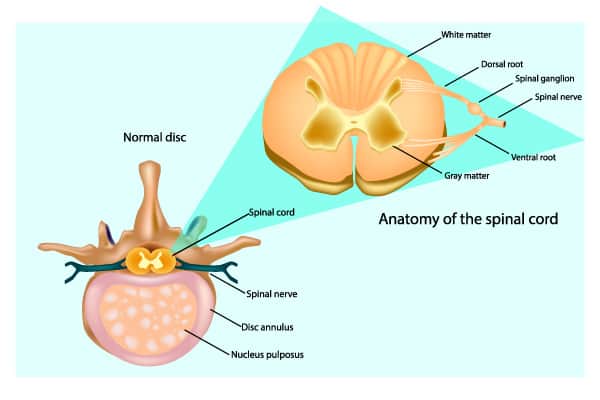
By definition, spinal stenosis is when one’s spinal column and/or foramina (openings that branch away from the spinal canal providing pathways for root nerves) narrows—putting pressure on the spinal cord or root nerves. The word “stenosis” comes from the Greek word, “choking.” Therefore, spinal stenosis could almost be described as, “choking one’s spine.” 


Mostly affecting the cervical (neck) and lumbar (lower back) parts of the spine, spinal stenosis can interfere with nerve function and cause pain in one’s back and/or other parts of the body. 
Watch this video about spinal stenosis
What are the symptoms of spinal stenosis?
Symptoms of spinal stenosis depend on its location and severity of the condition. Some of the most common symptoms include:

  • Cervical (neck)
    • Pain, weakness, numbness and tingling in the arms/hands/fingers
    • Loss of dexterity often leading to dropping items
    • Stiff or sore neck
    • Pain around the shoulder blades
    • Tremors in the arm or hand
  • Lumbar (lower back)
    • Leg pain, weakness and/or numbness
    • Difficulty or poor balance when walking; clumsiness
    • Sciatica—a burning pain throughout the buttocks and down the legs
    • Increased leg pain when walking that is diminishes when resting
    • Foot pain
    • Pain in the buttocks
    • Hip pain and/or weakness
More severe cases of spinal stenosis may include loss of bladder or bowel control. Patients experiencing these symptoms should seek emergency help right away.

How is spinal stenosis diagnosed?
The most common procedures used to diagnose spinal stenosis are:

  • Magnetic resonance imaging (MRI) is used to get detailed images of spinal discs. MRIs use a giant magnetic that circles the body.
  • Computerized tomography (CT) scan with myelogram is an X-ray used with a special dye injected into the spinal fluid. The CT scan is used to help identify the “bony” causes of spinal stenosis, while the dye helps diagnose soft tissue conditions such as disc herniation or a bulge.
  • Selective nerve root block (SNRB) is when a local anesthetic is injected into a nerve root suspected of being affected by spinal stenosis. If the patient’s pain goes away after the injection, it can be determined that the compressed nerve is the cause of pain.
What causes spinal stenosis?
There are a number of conditions that can cause spinal stenosis, including, but not limited to, a herniated disc(s), osteoarthritis, bone diseases, a dislocated or fractured vertebral bone, thickened spinal ligaments, excess growth of bone around the spinal nerves, an injury or blunt trauma that creating pressure on the nerve roots or spinal cord, tumors in the spine and people born with a smaller spinal canal (congenital condition).

What are the different spinal stenosis treatments?

Typically, a combination of treatments works best to treat spinal stenosis. Treatment options may include:

  • Exercise
  • Activity modification
  • Medication
  • Physical therapy
  • Heat and ice therapy
  • Injections
  • Surgery
Does spinal stenosis require surgery?
In some cases, surgery is required. SpineOne is dedicated to minimally invasive options whenever possible and will do everything we can to avoid surgery.

Where can I get treatment for spinal stenosis?
If you suffer from chronic or acute back pain and cannot find relief, you should always contact a spine specialist like the physicians at SpineOne.  SpineOne offers a comprehensive evaluation, diagnosis and treatment plan tailored to meet the needs of each individual patient. The physicians at SpineOne practice minimally invasive procedures combined with other practices to get you back on your feet and enjoying your life again. SpineOne provides doctor consultations, MRIs and treatments all from the same facility for your convenience. Same-day appointments are also available upon request.

Visit www.SpineOne.com or call 303.500.8611 today.

Wednesday, January 20, 2016

The First Shot Helped Me Right Away!

Fredric M. Sonstein, M.D., M.B.A

Read what first-time patient, Betty A., had to say about her experience at 
SpineOne.

“I was happy with the entire visit to SpineOne. The first shot helped me a lot, right away.”  -- Betty

Monday, January 11, 2016

What You Should Know About Back Pain from ZocDoc.

Back pain 101 – 
An infographic by the team at ZocDoc
We thought we would share this infograph that illustrates information you should know about back pain from the ZocDoc Blog.
  
If you suffer from chronic or acute back pain and cannot find relief, it may be time to contact a spine specialist like the physicians at SpineOne.  SpineOne offers a comprehensive evaluation, diagnosis and treatment plan tailored to meet the needs of each individual patient. 


The physicians at SpineOne practice minimally invasive procedures combined with other practices to get you back on your feet and enjoying your life again. SpineOne provides doctor consultations, MRIs and treatments all from the same facility for your convenience. Same-day appointments are also available upon request.

Visit www.SpineOne.com or call 303.500.8611 today.